
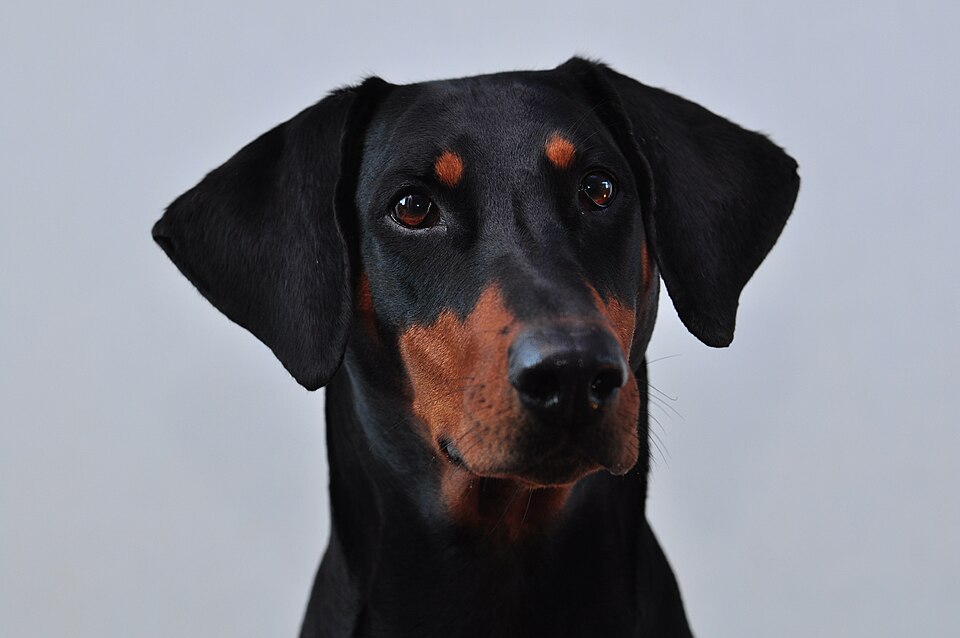
What hip dysplasia involves
ACVS describes canine hip dysplasia as abnormal looseness of the hip joint that develops during growth and can lead to arthritis. Genetics is an important risk factor, but development is multifactorial. A Doberman’s breed or an unusual gait alone does not establish the diagnosis.
Read the evidence: ACVS: canine hip dysplasia
Describe what has changed
Limping, reluctance to rise or jump, and hip pain can occur with hip dysplasia; some affected dogs show no obvious signs. Tell the veterinarian when changes began and what your dog finds difficult. Ask the clinic how soon it wants to assess the dog. Do not force a movement to make a video or complete this record.
Read the evidence: ACVS: signs and assessment
Ask what the examination and images show
ACVS describes diagnosis using veterinary examination and appropriately positioned radiographs. Ask what each finding means for your dog’s comfort and function. Screening records and today’s clinical assessment answer different questions; a report is not a home exercise prescription.
Read the evidence: ACVS: diagnostic evaluation
Get an individual activity and treatment plan
ACVS describes both medical management and surgical options, selected for the patient. Ask about comfortable activity, weight management, pain control and whether specialist assessment is appropriate. Request written instructions on what to avoid and when to recheck. Do not choose a drug, dose or rehabilitation exercise from this page.
Read the evidence: ACVS: treatment options
Prepare for the veterinary discussion
Use this for routine preparation. Do not delay urgent care to complete it.
Notes for your next step
Add a brief note beside each task, then print this guide. These notes stay in this page and are not saved or sent.
Common questions
Can a walking video diagnose hip dysplasia?
No. A video may help describe an observation, but veterinary assessment is needed.
Should I choose exercises from the X-ray report?
Ask the veterinarian to connect the findings with your dog’s examination and give an individual plan.
Observation → evaluation → care plan
- Owner observation
- What happened, when and during which ordinary activity. This is a description, not a diagnosis.
- Veterinary evaluation
- Examination and imaging findings interpreted by the veterinary team.
- Care plan
- Written activity limits, treatment instructions and a recheck chosen for this dog.
- Hypothetical example
- “Slower to rise after resting since Monday” is useful to report. “Hip dysplasia confirmed by the way he walks” goes beyond that observation.